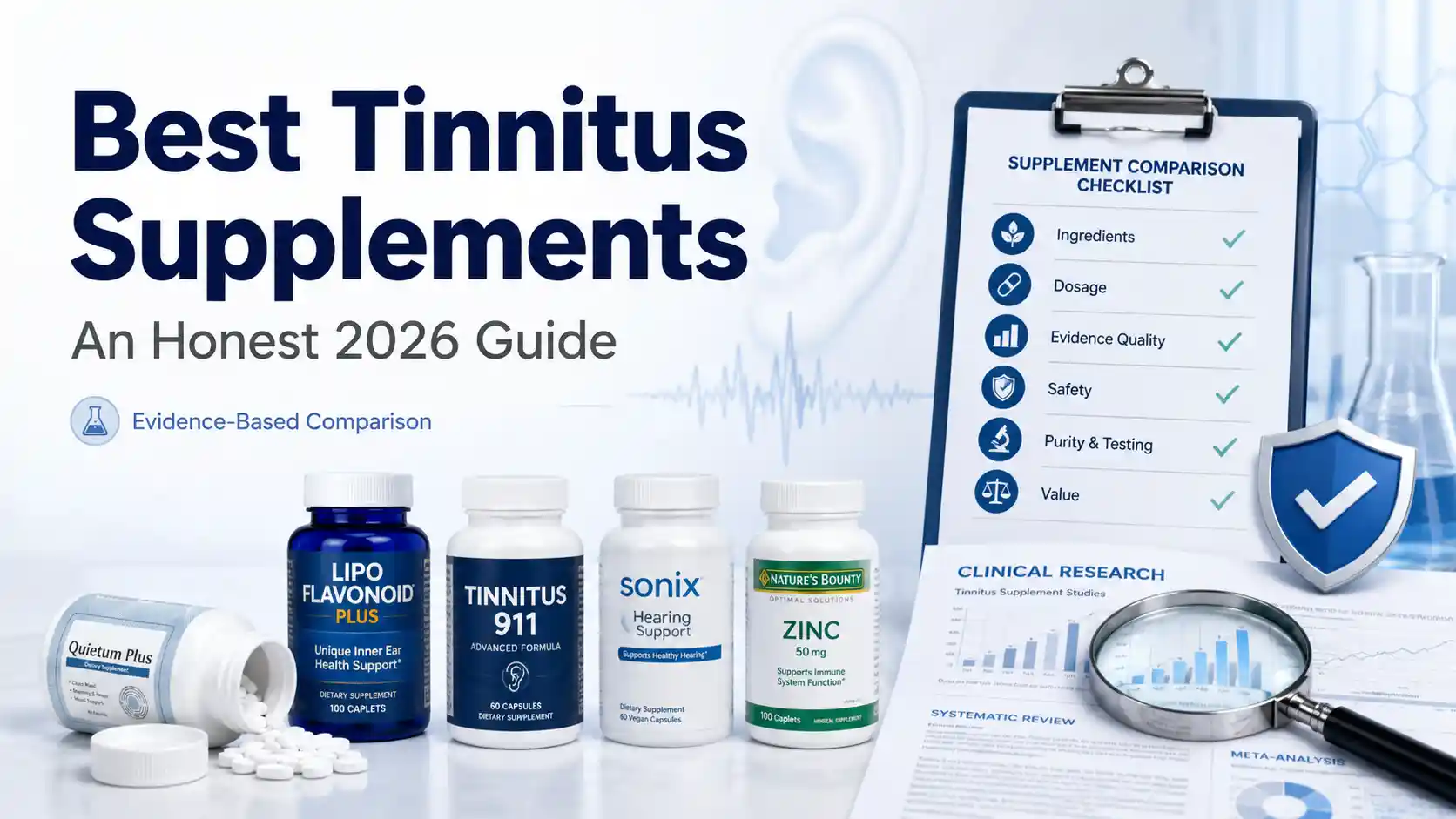
What Are The Best Tinnitus Supplements For Ringing In Ears In 2026?
Best tinnitus supplements are in high demand because 10% to 25% of adults experience ringing in the ears at some point.
Even so, no dietary supplement has been proven to cure tinnitus, and recent reviews continue to find limited or inconsistent evidence for most over-the-counter products.
Tinnitus Supplement Comparison Table
| Supplement | May help when | Evidence strength | Best candidate |
|---|---|---|---|
| Vitamin B12 | You are B12 deficient | Moderate (one RCT, several smaller studies) | Vegans, older adults, people with low B12 |
| Vitamin D | You are vitamin D deficient | Moderate and growing | People with confirmed low vitamin D |
| Magnesium | Noise stress or low intake | Weak to moderate (small pilots) | People with poor magnesium intake |
| Zinc | You are zinc deficient | Weak to moderate | Older adults, vegetarians |
| Ginkgo biloba | Rarely shows benefit | Weak (Cochrane: no clear effect) | Limited, watch drug interactions |
| Melatonin | Tinnitus disrupts sleep | Weak for noise, fair for sleep | Poor sleepers with tinnitus |
| Biotin / Lysine | No proven scenario | Very weak | Not recommended as primary |
What Is The Number One Supplement For Tinnitus?
People keep asking what the number one supplement for tinnitus and what is 1 nutrient that can fix tinnitus.
If you’re looking for a product recommendation, see our top pick reviewed before making a decision.
The truthful reply is that no single nutrient fixes tinnitus for everyone, because tinnitus has many different causes and one pill cannot address them all.
If forced to name the best tinnitus supplement by weight of evidence, vitamin B12 for people who are deficient comes closest, with vitamin D right behind it.
Both work by repairing a real shortfall rather than by magically resetting your ears.
That framing is the most reliable lens for picking any supplement for tinnitus: fix what is low, and skip the rest.
What Vitamins Help With Tinnitus? The Ones With Real Research
Below are the best vitamins for tinnitus and minerals worth knowing about, ranked loosely by how much evidence stands behind them.
Think of this as a map of where the science is strongest, not a shopping list.
Vitamin B12: The Strongest Case for a Deficiency Link
If you want one answer to what vitamin helps with ringing in the ears, vitamin B12 has the most interesting research.
People with tinnitus seem to run low on B12 more often than the general population. In one pilot study, 42.5% of tinnitus patients turned out to be B12 deficient, a striking number.
A 2024 randomized, double-blind, placebo-controlled trial of 80 patients found that intramuscular B12 (1000 micrograms per week for six weeks) lowered Tinnitus Handicap Inventory and severity scores compared with placebo, with the biggest gains in people who started out deficient. Patients who were not deficient saw little change.
The takeaway is clear. B12 helps tinnitus mainly when a deficiency exists. Ask your doctor to check your serum B12 before spending money.
Oral B12 works about as well as injections for correcting low levels, and it costs less.
Vitamin D: A Rising Star Among Ear Ringing Vitamins
Vitamin D has grown into one of the more studied vitamins for ears ringing. Low vitamin D has been linked to louder, more bothersome tinnitus in population studies, including a large Korean analysis.
A 2025 randomized controlled trial added weight to the idea. In patients with sudden hearing loss who were vitamin D deficient, adding vitamin D3 (1,500 to 2,000 IU per day) to standard care improved tinnitus outcomes in 83 percent of cases, against a much lower rate in the control group.
The effect was strongest in people with a documented shortage. Not every study agrees, and a trial in Meniere’s disease patients found no clear vertigo or tinnitus benefit, so vitamin D is best seen as a sensible fix for low levels rather than a guaranteed remedy.
Magnesium: Popular, With Mixed but Encouraging Evidence
Magnesium and tinnitus get talked about together constantly, and you will find plenty of posts titled “magnesium cured my tinnitus.”
The mineral helps regulate nerve signaling, calms neural overactivity, and may protect inner-ear hair cells from noise stress.
A small pilot study by Cevette and colleagues found that magnesium improved Tinnitus Handicap Inventory scores in patients with at least slight impairment, with a result that reached statistical meaning (p = 0.03).
The catch is that it ran with only 19 completers and no placebo group, so the finding needs confirmation. Other studies disagree on whether tinnitus patients even run low on magnesium.
If you try magnesium for tinnitus, magnesium glycinate is a gentle-on-the-stomach option many people prefer. Stick to sensible doses, since too much causes loose stools and cramps.
Zinc: Worth Testing in Older Adults
The inner ear holds one of the highest concentrations of zinc in the body, and the mineral plays a role in nerve signaling and immune function.
Zinc deficiency shows up more in older adults, vegetarians, and people with absorption trouble.
Trials suggest zinc supplements help tinnitus in people who are actually zinc deficient, while doing little for those with normal levels.
One caution matters here: high-dose zinc blocks copper absorption over time, so balance and medical guidance are wise.
Ginkgo Biloba: The Famous Name With Weak Results
Ginkgo biloba is the most marketed of all natural supplements for tinnitus, sold everywhere as a circulation booster for the inner ear.
The research has not been kind to it. A 2022 Cochrane review concluded that the limited, conflicting evidence does not show ginkgo reduces tinnitus loudness or improves quality of life when ringing is the main complaint.
Ginkgo also carries side effects worth respecting, including a raised bleeding risk and interactions with blood thinners, antidepressants, and seizure medication.
If you take any of those, treat ginkgo with caution and talk to a pharmacist first.
Melatonin: Better for Sleep Than for Silence
Melatonin will not quiet the ringing directly, but it helps the part of tinnitus that wrecks your nights.
As a sleep aid and antioxidant, it can ease the insomnia that tinnitus often triggers, which in turn makes the noise feel less consuming.
For people whose main complaint is lying awake listening to their ears, that is a fair reason to try it.
Biotin, Lysine, CoQ10, and Folate: Low-Evidence Extras
You will see biotin tinnitus and lysine tinnitus searches climbing, along with CoQ10 and folate. The honest summary is short.
No quality trial has shown that biotin or lysine reduces tinnitus. CoQ10 may help the small group of people who run low on it, and folate matters mainly through its role in healthy blood flow to the cochlea.
Treat these as long shots, not front-line picks.
What Tinnitus Is, And Why People Reach For Supplements?
Tinnitus is the medical name for hearing sound with no outside source, usually ringing, buzzing, hissing, or a low whoosh. It is a symptom, not a disease by itself.
It often points to something else going on in the body, such as age-related hearing loss, noise damage, earwax buildup, or a blood-flow issue.
It is also widespread. Research places chronic tinnitus in roughly 10 to 33% of adults, and the American Academy of Otolaryngology reports that about 1 in 5 people notice it at some stage of life.
Many of those cases stay mild. Roughly 20% of people who hear ringing have symptoms bad enough to need clinical care.
That gap between mildly annoying and genuinely distressing explains why so many people search for vitamins for tinnitus.
When a doctor says there is no simple cure, the supplement aisle starts to look very inviting.
Do Tinnitus Supplements Actually Work?
For most people with long-standing, bothersome ringing, tinnitus supplements do not reliably lower the noise on their own.
The 2014 clinical practice guideline from the American Academy of Otolaryngology recommends against ginkgo biloba, melatonin, zinc, and other dietary supplements as a routine treatment, because the data does not show a clear benefit for the average patient.
So do tinnitus pills work at all? Sometimes, in one narrow situation: when you are low on a nutrient your hearing system depends on.
The clearest pattern across the research is that supplements help most when they correct a measured deficiency.
B12 helps people who are B12 deficient. Zinc helps people who are zinc deficient. Magnesium and vitamin D follow the same rule.
Swallowing handfuls of pills without knowing your blood levels is unlikely to do much, and it can carry real risks.
That single idea should shape every decision you make below. The smartest first step is not a purchase. It is a blood test.
Tinnitus Supplement Reviews: How To Spot A Scam?
Search for tinnitus supplement reviews, and you will trip over names like Tinnitus 911, Sonus Complete, Synapse XT, Auritine, Audiozen, and Tinnitus Ease.
Many arrive through affiliate platforms such as ClickBank, BuyGoods, or Mediprime, wrapped in long video sales pitches and glowing testimonials.
Consumer-protection groups and audiologists have flagged several of these products hard. Watchdog sites and forums describe Tinnitus 911, Sonus Complete, and Synapse XT as classic online supplement scams, complete with invented “doctor” authors, fake customer stories, and recycled ingredient lists that no clinical trial supports.
One reviewer traced Synapse XT’s supposed 56-year-old professor author and found the person did not exist.
You do not need a chemistry degree to smell trouble. Watch for these red flags before you buy any ear ringing supplement:
- A promise to cure or reverse tinnitus. Real science does not claim a cure. Anyone who does is selling, not helping.
- A dramatic origin story about a doctor who “discovered the hidden cause big pharma hides.” That script sells thousands of products.
- Reviews you cannot verify, especially five-star testimonials only on the seller’s own site.
- Countdown timers and “only 3 bottles left” pressure tactics.
- A proprietary blend that hides exact doses, so you never know if amounts match anything tested in a study.
- Sold only through an affiliate funnel with no presence on reputable pharmacy shelves.
If a product checks several of those boxes, your money is safer in your pocket. The fact that something appears on a big marketplace or affiliate network is not proof that it works.
How Can You Ease Ringing In The Ears Naturally?
Plenty of people online claim “diet cured my tinnitus.” Food alone rarely cures it, but smart habits can shrink the triggers and turn the volume down on bad days.
These approaches have stronger backing than most bottles.
- Cognitive behavioral therapy (CBT). This carries the highest level of evidence in the official guideline. It does not erase the sound, but it changes how much the sound bothers you, which for many people is the whole battle.
- Hearing aids. If you have hearing loss alongside ringing, a hearing aid evaluation is a top recommendation. Better hearing often masks tinnitus naturally.
- Sound therapy. White noise, fans, or specialized maskers give your brain something else to latch onto.
- Cutting triggers. Loud noise, too much caffeine, heavy alcohol, nicotine, and high stress can all crank tinnitus up. Trimming them back helps some people noticeably.
- Protecting your ears. Earplugs at concerts and worksites stop the next round of damage.
- Managing stress and sleep. Stress is a well-known amplifier of ringing, so anything that calms your nervous system tends to help.
A treatment plan that mixes proven care with targeted diet and lifestyle tweaks beats any single pill for lasting relief.
How To Choose A Tinnitus Supplement Safely?
If you still want to try vitamins for tinnitus relief, do it the smart way:
- Get blood work first. Ask for B12, vitamin D, zinc, magnesium, and folate levels. Supplements pay off mainly when they fix a really low number.
- Talk to your doctor or pharmacist. This matters most if you take blood thinners, antidepressants, or seizure medication, since ginkgo and others can interact.
- Pick single-ingredient products over mystery blends. Single nutrients like magnesium or B12 are more predictable than proprietary mixes.
- Look for third-party testing. Seals from independent labs mean the bottle holds what the label claims.
- Set a trial window and re-test. For a B12 deficiency, trials ran about six weeks before measuring change. Give a fair trial, then check your levels and your symptoms instead of refilling on hope alone.
Final Thought On Best Tinnitus Supplements
The best tinnitus supplements provide vitamins, minerals, and herbal ingredients that support overall health, but none has been proven to cure tinnitus or reverse hearing loss.
Before buying any supplement, review its ingredient list, look for third-party quality testing, and discuss it with your healthcare provider if you take medication or have a medical condition.
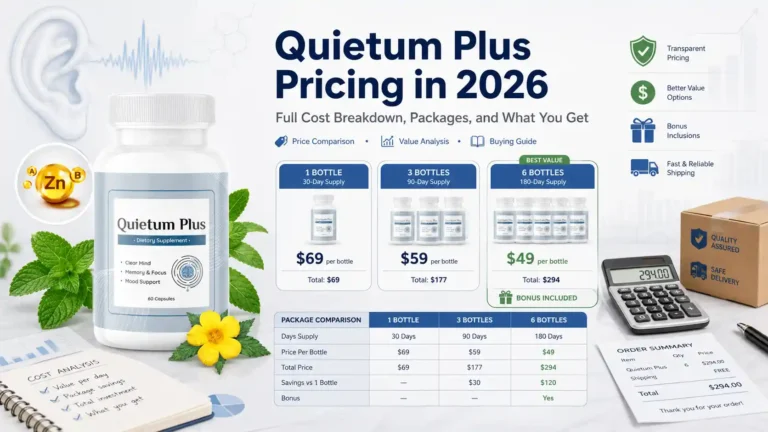
If you’re considering Quietum Plus specifically, our article to Quietum Plus ingredients explains what the formula contains and what the research says about each component.
If your tinnitus is sudden, affects only one ear, or is accompanied by dizziness or hearing loss, seek medical attention promptly.
A proper diagnosis is the first step toward choosing the most appropriate treatment.
Frequently Asked Questions
What vitamin helps tinnitus go away?
No vitamin makes tinnitus vanish on command. B12 and vitamin D give the best odds of improvement, and only for people who are actually low on them. Correcting a deficiency is the realistic goal, not a disappearing act.
How long does it take for B12 to help tinnitus?
In the main clinical trial, deficient patients received B12 for about six weeks before researchers measured a drop in symptoms. Plan on several weeks at minimum, then re-test your levels rather than guessing.
Can magnesium cure tinnitus?
There is no proof that magnesium cures tinnitus. A small pilot showed it may ease symptoms in some people, and many report relief online, but the strong “magnesium cured my tinnitus” claims run ahead of the science.
What is the best vitamin for tinnitus?
By weight of evidence, vitamin B12 for deficient patients is the best-supported choice, with vitamin D close behind.
Do tinnitus supplements work for everyone?
No. They tend to help only the slice of people whose tinnitus links to a nutrient shortage. For most long-term, bothersome cases, sound therapy, CBT, and hearing aids do more than any pill.
Is a vitamin deficiency causing my tinnitus?
It might be a piece of the puzzle. A tinnitus vitamin deficiency, such as low B12, zinc, or vitamin D, can worsen the noise, which is exactly why testing beats blind supplementing. Searches in other languages, like the Indonesian vitamin untuk tinnitus, point to the same short list of nutrients.
Sources
- American Academy of Otolaryngology–Head and Neck Surgery, Clinical Practice Guideline: Tinnitus (2014).
- Sereda M, et al. Ginkgo biloba for tinnitus. Cochrane Database of Systematic Reviews (2022).
- National Center for Complementary and Integrative Health, Ginkgo (2025).
- National Institutes of Health, Office of Dietary Supplements, Magnesium and Zinc fact sheets.
- Serum vitamin B12 levels and tinnitus severity, The Egyptian Journal of Otolaryngology (2026), citing Dadgarnia et al. randomized B12 trial (2024).
- Vitamin D combined with conventional therapy for sudden sensorineural hearing loss, Head & Face Medicine (2025).
- Vitamin D Deficiency as a Risk Factor of Tinnitus, Annals of Otology, Rhinology & Laryngology (2024).
- Consumer-protection reporting on tinnitus supplement scams, San Diego Consumers’ Action Network and ContraHealthScam.