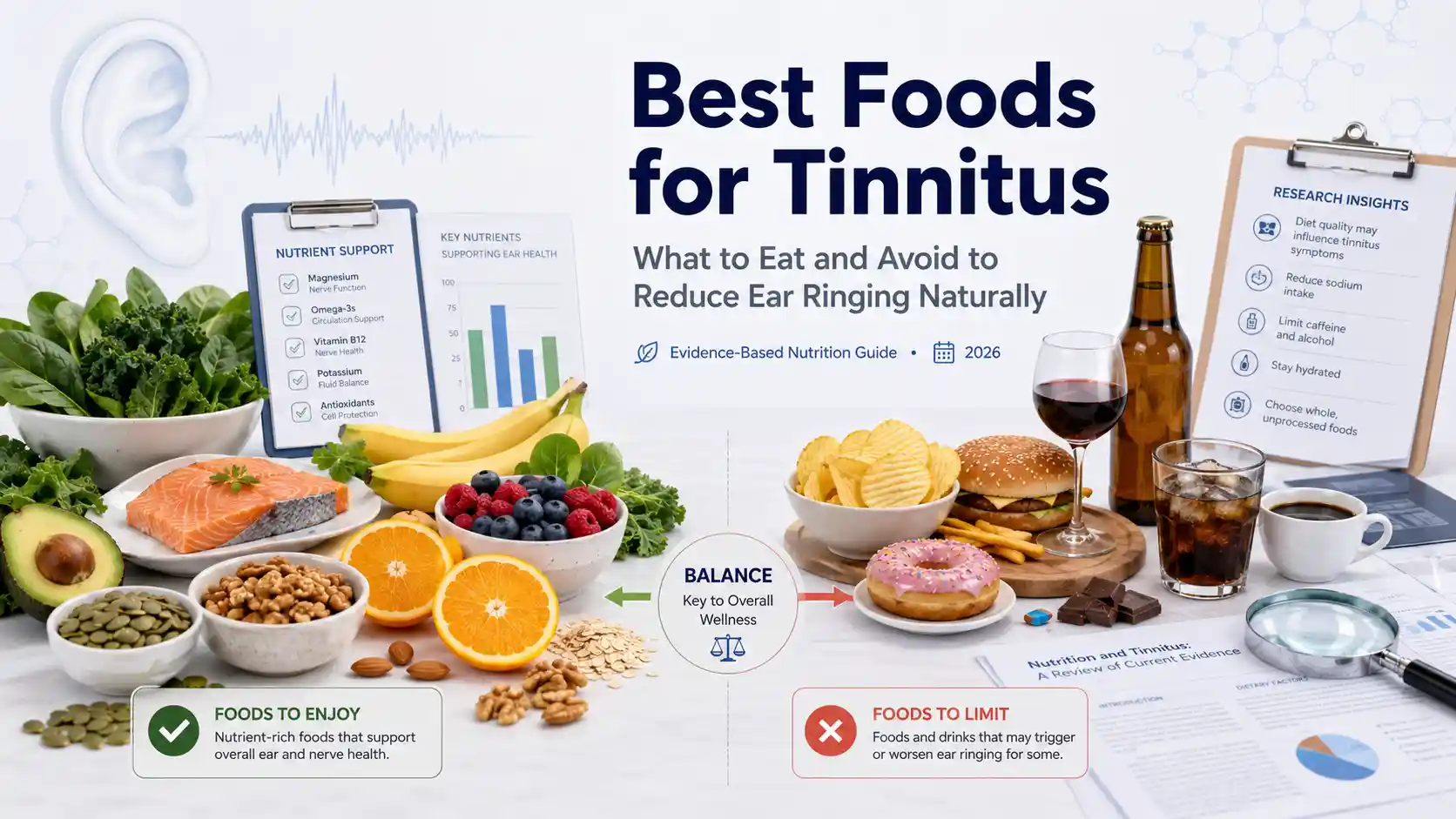
Best Foods For Tinnitus: What To Eat & Avoid Naturally?
Best foods for tinnitus can support healthy blood flow, reduce inflammation, and provide nutrients that help the inner ear function properly.
Tinnitus affects about 14.4% of adults worldwide, making it a common concern for many people.
While diet cannot cure tinnitus, eating nutrient-rich foods and avoiding common dietary triggers may help some people manage symptoms more comfortably.
This article explains what to eat and what to avoid naturally.
Best Foods For Tinnitus: What Science Says To Eat More?
1. Fruits: The Strongest Dietary Protection Found So Far
The 2025 BMJ Open meta-analysis found that people with the highest fruit intake had a 35% lower risk of developing tinnitus compared to those who ate the least fruit. [1]
That is the single largest dietary protective effect identified in the study. Fruits are rich in antioxidants like vitamin C, flavonoids, and natural compounds that fight oxidative stress in the inner ear.
Best fruits to include regularly:
- Pineapple (contains bromelain, which has anti-inflammatory properties)
- Berries (blueberries, strawberries, and raspberries loaded with antioxidants)
- Bananas (excellent source of potassium, which supports inner ear fluid balance)
- Papayas and mangos (high in potassium and antioxidant vitamins)
- Citrus fruits like oranges and grapefruits (vitamin C to fight oxidative damage)
Pineapple and tinnitus deserve a special mention. Bromelain, the natural enzyme in pineapple, is known for its anti-inflammatory effects throughout the body.
While direct human studies specifically on pineapple juice for tinnitus are still limited, its anti-inflammatory profile makes it a smart addition to any tinnitus diet plan.
2. Dietary Fiber: Small Change, Real Impact
Higher fiber intake was linked to a 9% reduction in tinnitus risk in the same 2025 meta-analysis.
Fiber supports gut health, which in turn reduces systemic inflammation throughout the body. Chronic inflammation is one of the pathways believed to worsen tinnitus symptoms.
Good fiber sources to eat daily:
- Oats and whole grains
- Lentils, beans, and chickpeas
- Broccoli, carrots, and leafy greens
- Flaxseeds and chia seeds
- Sweet potatoes and brown rice
A high-fiber diet also helps maintain stable blood sugar levels. Blood sugar spikes can worsen tinnitus by disrupting the delicate circulation in your ears, so steady glucose through fiber-rich meals is a practical win.
3. Dairy Products: More Beneficial Than Expected
Dairy consumption was associated with a 17% lower risk of tinnitus in the 2025 study.
Dairy foods provide calcium, vitamin D, vitamin B12, and potassium, all of which play a role in nerve function and inner ear health.
Dairy options to consider:
- Low-fat milk and fortified plant milks
- Yogurt (especially plain varieties with live cultures)
- Cheese in moderate amounts (watch sodium content in processed cheeses)
- Kefir (adds probiotics that support gut-brain health)
Yogurt specifically combines the benefits of dairy with the gut health advantages of probiotics, making it one of the better foods that help with tinnitus overall.
4. Potassium-Rich Foods: Keeping The Inner Ear Fluid In Balance
Potassium plays a specific mechanical role in hearing. The fluid inside the inner ear, called endolymph, depends on potassium to convert sound vibrations into electrical nerve signals sent to the brain.
As people age, potassium levels in the inner ear decline, and that decline is closely linked to age-related hearing loss and tinnitus.
Foods high in potassium that support ear health:
- Bananas
- Sweet potatoes
- Apricots
- Spinach
- Avocados
- Pears and papayas
- Yogurt
Adding even a few of these foods for tinnitus to your daily eating habits can help maintain the biochemical environment your inner ear needs.
5. Magnesium: A Mineral That Calms Nerve Activity
Magnesium is one of the most talked-about nutrients for tinnitus. It works by helping blood vessels stay relaxed, which maintains proper blood flow to the inner ear.
Restricted circulation to the cochlea is a known contributor to tinnitus.
A phase 2 study published in the International Tinnitus Journal found that magnesium supplementation showed benefit in magnesium-dependent tinnitus cases.
Magnesium-rich foods to add to your tinnitus diet:
- Dark leafy greens (spinach, Swiss chard)
- Pumpkin seeds and almonds
- Dark chocolate (in moderation, at least 70% cocoa)
- Black beans and lentils
- Whole wheat bread and quinoa
- Avocados
6. Zinc-Rich Foods: Support For The Auditory System
Zinc is highly concentrated in the cochlea and plays a role in protecting the inner ear against free radical damage.
Research published in Otology & Neurotology found that zinc supplementation helped reduce tinnitus severity in patients who were zinc-deficient.
The effect appears most relevant in people who already have low zinc levels.
Foods good for tinnitus through zinc content:
- Oysters (the richest natural source of zinc)
- Beef and lamb
- Pumpkin seeds
- Cashews and hemp seeds
- Chickpeas and lentils
- Eggs
7. Fish and Seafood: Omega-3s and Tinnitus Prevention
A December 2024 study found that consuming tuna fish, light-meat fish, and shellfish was linked to a lower risk of developing persistent tinnitus in women.
Omega-3 fatty acids from fish reduce inflammation and support healthy circulation, both of which matter for ear health.
Best seafood options for tinnitus nutrition:
- Salmon and sardines (rich in omega-3s)
- Tuna (moderation advised due to mercury)
- Mackerel and herring
- Shellfish like shrimp and oysters
Unsaturated fats from fish can also help counteract the negative vascular effects of saturated fats, which is an added benefit for people whose tinnitus has a circulatory component.
8. Vitamin B12 Foods: The Deficiency-Tinnitus Link
Vitamin B12 and tinnitus have a well-documented relationship. A 1993 study by Shemesh and colleagues found B12 deficiency in 47% of military personnel with noise-induced hearing loss and tinnitus, which was significantly higher than in people with normal hearing.
A double-blind, placebo-controlled trial found that intramuscular B12 at 1,000 mcg per week for six weeks significantly improved tinnitus in patients who were deficient.
The question many people ask is how much vitamin B12 for tinnitus is the right amount. There is no specific tinnitus-targeted dosage established in guidelines. The standard adult NRV is 2.4 micrograms daily.
For people with confirmed deficiency, therapeutic doses under medical supervision typically range from 500 to 1,000 mcg daily of the methylcobalamin form.
It is best to get B12 levels tested before supplementing at high doses.
Foods rich in vitamin B12:
- Clams and oysters (extremely high concentration)
- Beef liver
- Salmon and tuna
- Eggs
- Dairy products like milk and yogurt
- Fortified cereals and plant milks (important for vegetarians and vegans)
The 2020 study cited by AOL/Medical News Today specifically found that a higher intake of vitamin B12 and a high-protein diet were associated with reduced tinnitus risk.
9. Folic Acid (Folate) and Tinnitus
Folic acid and tinnitus are connected through a specific biological pathway. Folic acid helps the body metabolize homocysteine, an amino acid that can impair blood flow to the inner ear when levels are elevated.
Research from the American Tinnitus Association notes that folate also acts as an antioxidant that protects the inner ear from free radical damage caused by loud noise exposure.
Best food sources of folate:
- Dark leafy greens (spinach, kale, romaine lettuce)
- Asparagus and Brussels sprouts
- Legumes like black-eyed peas and lentils
- Fortified breads and cereals
- Citrus fruits and avocados
Does Diet Really Affect Tinnitus?
Yes, diet affects tinnitus in measurable ways. The inner ear is one of the most blood-flow-sensitive organs in your body.
It depends on a steady supply of oxygen, nutrients, and proper fluid balance to work correctly.
When your diet disrupts circulation, causes inflammation, or creates nutrient deficiencies, the delicate hair cells inside the cochlea can suffer, and that suffering often shows up as ringing in the ears.
The findings were clear: Eating more fruit, dietary fiber, dairy products, and caffeine was associated with a reduced occurrence of tinnitus.
The researchers concluded that “diet-based strategies for tinnitus prevention are anticipated to play a significant role in chronic tinnitus management.”
This does not mean food alone is a tinnitus cure. But tinnitus nutrition matters far more than most doctors discuss during routine appointments.
Which Foods Should You Avoid For Tinnitus?
Understanding tinnitus foods to avoid is just as useful as knowing what to eat. Several common foods and drinks can trigger tinnitus spikes or make existing symptoms feel louder.
Sodium and Salt
Excess sodium causes the body to retain fluid and raises blood pressure. This increase in fluid pressure can directly affect the inner ear, making tinnitus louder.
Processed foods, canned soups, fast food, and packaged snacks are the biggest culprits.
Many people find that starting a low-sodium diet produces noticeable improvement in tinnitus intensity.
What to avoid:
- Canned soups and instant noodles
- Processed deli meats and sausages
- Salted snack foods like chips and crackers
- Fast food meals
- Soy sauce and bottled condiments
Sugar and Refined Carbohydrates
The National Institutes of Health has noted that a significant portion of tinnitus patients have a glucose metabolism issue called hyperinsulinemia.
Blood sugar spikes affect inner ear circulation and nerve function. Artificial sweeteners like aspartame have also been reported to worsen tinnitus in some people by affecting nerve signaling.
What to limit:
- Candy, cakes, and pastries
- Sweetened soft drinks and fruit juices
- White bread and white rice
- Sugar-laden breakfast cereals
- Foods with aspartame (diet sodas, some sugar-free products)
Saturated Fats & High-Cholesterol Foods
Saturated fats raise cholesterol levels and contribute to atherosclerosis (narrowed blood vessels), which reduces blood flow to the cochlea.
Tinnitus caused or worsened by poor vascular health responds particularly badly to high-fat diets. Cheese, butter, red meat, and fried foods should be kept to a minimum.
MSG and Additives
Monosodium glutamate (MSG) is a flavor enhancer found in many processed foods, fast food sauces, and seasoning packets.
It acts as an excitatory neurotransmitter and can overstimulate the nervous system, making tinnitus symptoms more intense for sensitive individuals.
Other preservatives and artificial additives in processed foods can similarly trigger neurological irritation.
What to watch for on food labels:
- MSG and hydrolyzed vegetable protein
- Artificial food colorings
- Sodium nitrate in processed meats
- Sulfites in dried fruits and wines
Which Vitamins Help With Tinnitus?
Some vitamins and minerals support hearing health. They do not cure tinnitus, and a balanced diet should come first.
| Nutrient | Role in Tinnitus Management | Best Food Sources |
|---|---|---|
| Vitamin B12 | Nerve health; deficiency linked to tinnitus | Clams, beef liver, salmon, eggs, dairy |
| Folic Acid (B9) | Reduces homocysteine; protects inner ear blood flow | Leafy greens, legumes, fortified foods |
| Magnesium | Relaxes blood vessels; calms auditory nerve | Spinach, pumpkin seeds, almonds, dark chocolate |
| Zinc | Cochlear protection from oxidative stress | Oysters, beef, pumpkin seeds, chickpeas |
| Potassium | Maintains inner ear fluid balance | Bananas, sweet potatoes, avocados, yogurt |
| Vitamin C | Antioxidant protection for cochlear cells | Citrus fruits, berries, bell peppers |
| Vitamin D | Linked to hearing nerve health; found in dairy | Fortified dairy, fatty fish, egg yolks |
No single vitamin can make tinnitus disappear. If you have a vitamin or mineral deficiency, fixing it may support hearing health and ease symptoms in some cases.
A nutrient-rich diet, regular medical care, and a treatment plan based on the cause of your tinnitus offer the best chance of long-term relief.
Can An Anti-Inflammatory Diet Help Tinnitus?
Beyond specific nutrients, following an anti-inflammatory diet for tinnitus addresses the condition more comprehensively.
Chronic inflammation is believed to play a role in maintaining and worsening tinnitus by keeping the auditory system in a heightened state of sensitivity.
The Mediterranean diet fits this goal well. It is rich in fruits, vegetables, whole grains, legumes, lean fish, olive oil, and nuts, while limiting red meat, processed foods, and refined sugar.
Core principles of an anti-inflammatory tinnitus diet plan:
- Eat at least five servings of fruit and vegetables daily
- Choose whole grains over refined ones
- Get two or more servings of fatty fish per week
- Use olive oil as your main cooking fat
- Eat nuts and seeds as regular snacks
- Limit red meat to no more than twice a week
- Drink plenty of water throughout the day
Diet is only one part of an overall approach to managing tinnitus.
If you’re also considering supplements, review the best tinnitus supplements for ringing in ears to compare the available options and their supporting evidence.
What Natural Foods Help With Tinnitus?
Beyond nutrients, several natural compounds found in everyday foods act as natural tinnitus remedies with varying levels of evidence.
- Bromelain (Pineapple) – Bromelain is the enzyme found in fresh pineapple and pineapple juice. Its anti-inflammatory properties have been studied in numerous contexts. For tinnitus, the connection is through reducing systemic inflammation that can amplify auditory nerve sensitivity.
- Ginger – Ginger contains gingerol and shogaol, anti-inflammatory compounds that support circulation. Better blood flow to the cochlea is one of the mechanisms thought to reduce tinnitus symptoms naturally.
- Garlic – Garlic improves peripheral blood circulation and has antioxidant properties. Regular garlic consumption as part of a broader tinnitus diet may support vascular health in the inner ear.
- Green Tea – Green tea contains EGCG (epigallocatechin gallate), a powerful antioxidant. Oxidative stress in cochlear hair cells is a recognized contributor to noise-induced tinnitus.
What Does A Tinnitus Diet Look Like For A Day?
A practical ear diet for someone managing tinnitus might look like this:
- Breakfast: Oatmeal with banana slices, a handful of mixed berries, and a glass of fortified milk. This combination covers fiber, potassium, antioxidants, and B12 in a single sitting.
- Mid-Morning Snack: A small handful of almonds and pumpkin seeds (magnesium and zinc), with a cup of green tea.
- Lunch: Grilled salmon on a bed of mixed greens with avocado, cherry tomatoes, and olive oil dressing. Add a side of lentil soup for folate and fiber.
- Afternoon Snack: Fresh fruit plate with sliced pineapple, mango, and papaya.
- Dinner: Stir-fried chicken breast with spinach, broccoli, and brown rice. Season with fresh garlic and ginger rather than soy sauce or MSG-based seasonings.
- Evening: Plain yogurt with a drizzle of honey and a few walnuts.
This simple day covers all the major nutrients and foods that help reduce tinnitus while avoiding the main dietary triggers.
What About Ayurvedic & Natural Treatment For Tinnitus?
Ayurvedic treatment for tinnitus focuses on several dietary and herbal approaches.
Sesame seeds, ashwagandha, and ginkgo biloba are commonly used in traditional Indian medicine systems.
The National Center for Complementary and Integrative Health notes that ginkgo biloba has been studied for tinnitus, though a 2022 Cochrane review found the evidence insufficient to confirm significant benefit.
Yoga and mindfulness meditation are also recommended in Ayurvedic frameworks for managing stress-related tinnitus.
From a food perspective, Ayurveda recommends warm, easily digestible foods that support Vata balance, including cooked vegetables, warm soups, ghee in moderation, and avoiding cold, raw, or excessively dry foods.
Can Tinnitus Be Cured Naturally Through Diet Alone?
The current scientific evidence does not support the idea that diet alone permanently cures tinnitus.
Several people do report significant relief, sometimes describing it as “diet cured my tinnitus,” particularly when their tinnitus was driven by nutritional deficiencies, high blood pressure, or inflammation.
What is clear from 2025 research is that specific foods reduce the risk of developing tinnitus and may reduce symptom severity in those who already have it.
The researchers who conducted the BMJ Open study were careful to note that their findings suggest diet plays a role in prevention and management, not a guaranteed cure.
If your tinnitus is moderate to severe, diet changes work best as part of a broader management approach that includes sound therapy, stress management, and medical evaluation to rule out correctable causes.
What Should Your Tinnitus Nutrition Checklist Include?
The table below shows foods that support inner ear health and foods that may trigger or worsen tinnitus symptoms.
| Eat More Of | Why It May Help Tinnitus | Eat Less Of | Why It May Worsen Tinnitus |
|---|---|---|---|
| Fresh fruits (berries, bananas, citrus fruits, pineapple) | Rich in antioxidants and vitamin C that support blood vessel and nerve health. | High-sodium processed and packaged foods | Too much sodium may raise blood pressure and reduce blood flow to the inner ear. |
| High-fiber foods (oats, legumes, vegetables) | Help support heart health and healthy circulation, which may benefit the inner ear. | Refined sugar and artificial sweeteners | Can cause blood sugar spikes that may trigger tinnitus symptoms in some people. |
| Dairy or fortified alternatives (milk, yogurt, fortified plant milk) | Provide calcium and vitamin D, which support hearing and bone health. | Saturated fats (fried foods, processed meats) | May affect blood circulation and increase inflammation. |
| Fatty fish (salmon, sardines, tuna in moderation) | Rich in omega-3 fatty acids that support healthy blood flow and may protect hearing. | Alcohol (especially beer and wine) | May change blood flow and make ringing louder for some people. |
| Potassium-rich foods (sweet potatoes, avocados, bananas) | Help regulate fluid balance in the inner ear. | MSG and chemical additives | Some people report increased tinnitus after consuming foods with MSG or certain additives. |
| Magnesium-rich foods (spinach, almonds, pumpkin seeds) | Support nerve function and may help protect the inner ear from noise-related damage. | ||
| Zinc-rich foods (oysters, beef, chickpeas) | Help support immune function and may benefit people with zinc deficiency. | ||
| Vitamin B12-rich foods (eggs, dairy, clams, fortified foods) | Help maintain healthy nerves and may help if tinnitus is linked to B12 deficiency. | ||
| Folate-rich foods (leafy greens, legumes, citrus fruits) | Support healthy blood circulation and nerve function. |
The relationship between tinnitus and diet is now backed by meaningful evidence. Making these changes will not happen overnight, but a consistent ear diet built around whole, nutrient-dense foods gives your auditory system the best environment to stay calm and function well.
References
- Increasing fruit, fibre, dairy and caffeine linked to lower risk of tinnitus
- Glicksman JT, Curhan SG, Curhan GC. A prospective study of diet and incident tinnitus in women. American Journal of Medicine.
- Le Prell CG, et al. Dietary supplements and hearing loss: Magnesium and other nutrients.
- National Institute on Deafness and Other Communication Disorders (NIDCD). Age-related hearing loss.
- Fuller T, et al. Cognitive and dietary factors in tinnitus management. Cochrane Database of Systematic Reviews. 2020.