Quietum Plus Side Effects: What The Evidence Really Says In 2026?
Quietum Plus side effects are a common concern for anyone considering this hearing support supplement.
Tinnitus affects an estimated 10% to 25% of adults, yet no dietary supplement has been approved to treat it.
While Quietum Plus is marketed as a natural formula, the available evidence comes mainly from its ingredients and manufacturer claims rather than large clinical trials on the finished product.
What Are The Most Common Quietum Plus Side Effects?
Across user reviews and seller pages, the reported reactions are mild and usually show up in the first week, then fade as the body adjusts.
The most common complaints include:
- Stomach upset or bloating, often when the capsules are taken without food
- Mild headaches during the first few days
- Nausea, usually short lived
- Dizziness or lightheadedness is reported less often
- Allergic type reactions, such as itching, rash, or swelling, in people sensitive to one of the plant ingredients
These reports are anecdotal, not measured in a controlled study, so treat the “less than 2%” safety stats some sellers quote with healthy skepticism.
There is no independent data behind those numbers.
| Reported side effect | How often it shows up | Typical timing | What usually helps |
|---|---|---|---|
| Digestive upset, bloating | Most common | First days of use | Take with a meal and water |
| Headache | Common | First week | Hydration, food, rest |
| Nausea | Occasional | First few days | Take with food |
| Dizziness | Uncommon | Early use | Lower activity, monitor |
| Allergic reaction | Rare | Any time | Stop use, seek care |
Which Quietum Plus Ingredients Cause Side Effects?
The product label does not publish the amount of each ingredient, which makes a precise safety assessment difficult.
If you’d like a complete breakdown of the ingredients of Quietum Plus, including their intended benefits and supporting research, see our dedicated guide.
Still, several of the listed botanicals have well-documented effects that are worth understanding before you start.
Black Cohosh and the Liver Warning
Black cohosh is one of the more studied ingredients, and it carries the most serious caution.
The National Center for Complementary and Integrative Health reports that some people taking products labeled as black cohosh have suffered liver damage, with a handful of cases serious enough to require a transplant.
Health agencies in the United States, the United Kingdom, Canada, Australia, and Europe have placed warning labels on black cohosh products because of this liver risk.
Watch for signs of liver trouble such as dark urine, yellowing skin, and unusual fatigue, and stop use and call a doctor if they appear.
Black cohosh can also cause mild stomach upset, headache, and rash, and it may clash with other supplements that affect serotonin or stress the liver.
Dong Quai and Bleeding Risk
Dong quai is a traditional Chinese herb used for circulation. It contains coumarin compounds that can thin the blood and slow clotting.
Peer-reviewed reviews of herb and drug interactions list dong quai among the botanicals most likely to raise bleeding risk when combined with anticoagulant or antiplatelet drugs like warfarin, aspirin, and clopidogrel.
If you take any blood thinner, this is a real concern, not a theoretical one.
Fenugreek, Allergies, & Blood Sugar
Fenugreek can lower blood sugar, which matters if you manage diabetes with medication, since the combined effect could push your levels too low.
Fenugreek is also linked to allergic reactions in people sensitive to peanuts or chickpeas, because the plants share related proteins.
People with those allergies should read the label closely.
Yam, L-Tyrosine, and Other Extracts
Wild yams may cause bloating or stomach cramps in larger amounts. L-tyrosine is generally well tolerated but can interact with thyroid medication and certain antidepressants.
Because the doses in Quietum Plus are not disclosed, you cannot judge how much of each you are actually getting.
What Is Quietum Plus, & Why Are Safety Questions Coming Up?
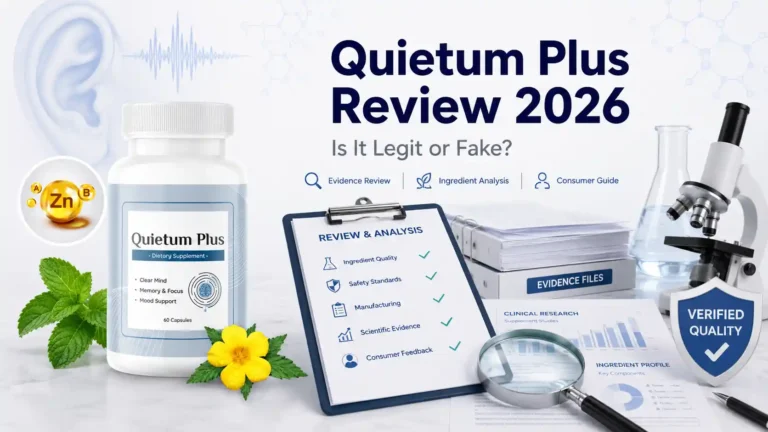
Quietum Plus is a daily dietary supplement that contains a blend of herbs, vitamins, and minerals such as black cohosh, dong quai, fenugreek, yam, and L-tyrosine.
The maker pitches it as support for the ear and brain connection, better inner ear blood flow, and calmer auditory nerves. The usual dose is two capsules a day with water.
Here is the honest starting point. No published clinical trial has tested the finished Quietum Plus product for safety or results.
That means almost all of the “side effects” talk online comes from customer anecdotes and from review blogs that earn a commission on each sale.
To get a real read on risk, you have to look at what science says about the individual ingredients, since those have been studied on their own.
If you’re looking for more information beyond safety, explore our common questions answered article covering the topics buyers ask most often before purchasing Quietum Plus.
Who Should Avoid Quietum Plus?
Some groups should skip this supplement unless a doctor clears it:
- Pregnant or breastfeeding people. Black cohosh, dong quai, and fenugreek are all linked to pregnancy risks, including possible miscarriage, and safety during nursing is unknown.
- Anyone under 18. The product is for adults, and it has not been tested in children.
- People with liver disease. The black cohosh liver warning makes this group at higher risk.
- People on blood thinners or facing surgery. Bleeding risk goes up.
- People with hormone-sensitive conditions, such as certain breast cancers, since black cohosh may act on hormones.
What The FDA Status Actually Means?
Marketing pages lean hard on the phrase “FDA-registered, GMP-certified facility.” Read that carefully, because it is easy to misread.
- An FDA-registered facility only means the plant where the product is bottled is on the FDA’s list of registered sites. It does not mean the FDA tested or approved Quietum Plus.
- Dietary supplements are never FDA-approved the way drugs are. By law, the maker cannot claim the product treats, cures, or prevents tinnitus or hearing loss.
- The supplement watchdog blog Illuminate Labs flagged that Quietum Plus does not list the dose of each ingredient and does not publish its inactive ingredients, both of which they call quality red flags.
So when a sales page mixes “FDA” and “Quietum Plus” in the same breath, it is borrowing the agency’s credibility without earning the agency’s approval.
Quality, Counterfeits, & Reputation Concerns
A few non-medical issues affect your real-world risk:
- Counterfeits are common. Quietum Plus is sold mainly through its own website, and fake bottles sold elsewhere may contain the wrong dose, swapped herbs, or untested fillers. Counterfeits drive a large share of the “it gave me side effects” and “it did nothing” complaints.
- Poor third-party ratings. Illuminate Labs noted a Better Business Bureau rating of around 1.09 out of 5, with reviewers calling the product ineffective.
- Thin evidence for the core promise. Independent reviewers point out that ingredients like zinc have not been shown in research to reduce tinnitus, so the supplement may simply not work for many users even when it causes no harm.
How To Lower Your Risk If You Decide To Try It?
If you still want to test Quietum Plus after weighing all of this, a few steps cut the danger:
- Clear it with your doctor first, especially if you take any prescription drug or have a chronic condition.
- Buy only from the official source to avoid counterfeit capsules.
- Take it with food and water to ease stomach upset.
- Never exceed two capsules a day. More will not speed results and only raises the chance of side effects.
- Stop and seek care if you notice dark urine, yellow skin, easy bruising, or any allergic reaction.
- Track your response over several weeks and judge it honestly.
See A Doctor About Tinnitus Before Reaching For A Pill
Ringing in the ears can signal earwax buildup, noise damage, a vitamin B12 deficiency, blood pressure problems, or a medication side effect, and each of those has a different fix.
A supplement cannot diagnose any of them. An ENT or audiologist can run simple tests, find the real cause, and point you toward treatments with actual evidence, from sound therapy to addressing a deficiency.
That step is cheaper than months of capsules and far more likely to help.
My Final Thought On Quietum Plus Side Effects
Quietum Plus is not a poison, but it is not the harmless “all-natural” pill its sales pages promise either.
Most users report only mild, passing reactions, yet the hidden ingredient doses, the black cohosh liver warning, the dong quai bleeding risk, and the lack of any trial on the actual product all add up to a supplement that deserves caution rather than blind trust.
Talk to a doctor, get your tinnitus properly checked, and treat any pill that promises to silence ear ringing as support at best, never a cure.
Frequently Asked Questions
Is Quietum Plus safe to take every day?
For healthy adults with no medications, the reported reactions are mild and short lived. The ingredient based risks, mainly liver and bleeding concerns, mean it is not automatically safe for everyone, so a doctor’s sign off is wise.
What are the most common Quietum Plus side effects?
Mild stomach upset, headache, nausea, and the occasional dizziness, usually in the first week. Allergic reactions are rare but possible.
Can Quietum Plus damage your liver?
The product itself has not been tested for this, but one of its ingredients, black cohosh, has been linked to rare cases of serious liver injury. Watch for dark urine and fatigue and stop use if they appear.
Does Quietum Plus interact with blood thinners?
It may. Dong quai and similar herbs can add to the effect of warfarin and aspirin and raise bleeding risk. Ask your doctor first.
Is Quietum Plus FDA approved?
No. Like all dietary supplements, it is not FDA-approved. The facility may be FDA registered, which is a separate and much weaker claim.
Sources
- National Center for Complementary and Integrative Health (NIH), Black Cohosh: https://www.nccih.nih.gov/health/black-cohosh
- National Center for Complementary and Integrative Health (NIH), Herb-Drug Interactions: https://www.nccih.nih.gov/health/providers/digest/herb-drug-interactions
- NIH LiverTox, Black Cohosh: https://www.ncbi.nlm.nih.gov/books/NBK547990/
- “A Review of Potential Harmful Interactions between Anticoagulant/Antiplatelet Agents and Chinese Herbal Medicines,” PLOS ONE / PMC: https://pmc.ncbi.nlm.nih.gov/articles/PMC3650066/
- Susan G. Komen, Black Cohosh safety and interactions: https://www.komen.org/breast-cancer/survivorship/complementary-therapies/black-cohosh/
- Illuminate Labs, Quietum Plus Review (independent, ingredient and BBB analysis): https://illuminatelabs.org/blogs/health/quietum-plus-review